One of the most common questions consumers ask after purchasing a quality pair of leather shoes is surprisingly simple:
How often should I polish my shoes?
Some people polish every week. Others only do it when their shoes start looking dull. Unfortunately, both approaches can be problematic. Over-polishing may cause wax buildup, while neglecting regular care can lead to dry, cracked leather.
The truth is that there is no universal schedule that works for every pair of shoes. The ideal polishing frequency depends on how often the shoes are worn, the environment they are exposed to, and the type of leather involved.
In this guide, we’ll explain the difference between conditioning and polishing, outline maintenance schedules for different types of footwear, and show how proper shoe care can significantly extend the life of leather shoes.
Understanding the Difference Between Conditioning and Polishing
Many consumers use the term “shoe polish” to describe every leather care product, but effective shoe maintenance actually involves two separate processes: conditioning and polishing.
Conditioning: Feeding the Leather
Leather naturally loses moisture and oils over time. Without replenishment, it can become stiff, faded, and eventually crack.
Leather conditioners and cream polishes are designed to penetrate the surface, restoring moisture, flexibility, and color. Think of conditioning as applying moisturizer to your skin—it keeps the material healthy from within.
Polishing: Protecting the Surface
Wax polish serves a different purpose.
Rather than nourishing the leather, wax remains on the surface to create a protective layer. This layer helps improve shine, resist moisture, and reduce the appearance of minor scuffs and scratches.
A simple rule applies to all leather footwear:
Condition first, polish second.
Healthy leather holds a shine better and remains durable for much longer.
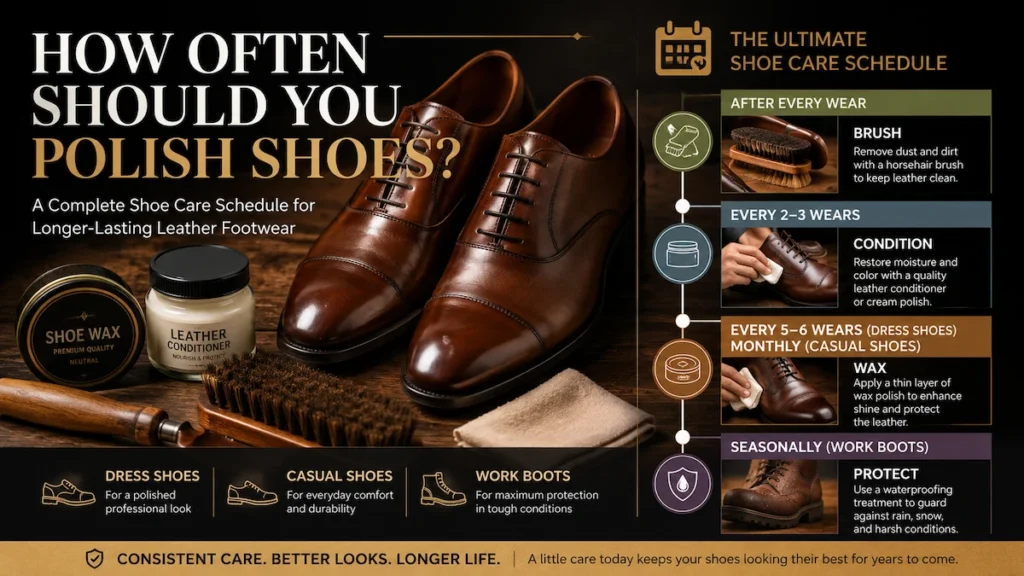
How Often Should You Polish Dress Shoes?
For professionals who regularly wear leather dress shoes to the office, meetings, or formal events, appearance is often a priority.
Recommended Schedule
After Every Wear
Use a horsehair brush to remove dust and dirt before storage.
Every 2–3 Wears
Apply a quality cream polish or leather conditioner to restore moisture and color.
Every 5–6 Wears
Apply a thin layer of wax polish to build shine and add surface protection.
This routine helps maintain a polished appearance without overloading the leather with excessive wax.
How Often Should You Care for Everyday Leather Shoes?
Business-casual and everyday leather shoes face different challenges. They are often exposed to commuting, walking, and varying weather conditions.
Recommended Schedule
Weekly
Wipe away dirt and surface contaminants.
Every 4–6 Wears
Apply a conditioner or cream polish to areas that experience frequent creasing.
Monthly
Use a light coat of wax polish to improve protection against moisture and everyday wear.
For everyday footwear, durability is usually more important than achieving a mirror shine.
How Often Should You Treat Work Boots and Outdoor Leather Boots?
Work boots and outdoor footwear are exposed to mud, water, dirt, and harsh environments that accelerate leather deterioration.
Recommended Schedule
After Heavy Exposure
Clean off mud, salt, and debris as soon as possible.
Monthly
Perform a deep conditioning treatment using a rich leather conditioner or oil-based leather care product.
Seasonally
Apply a heavier wax treatment, paying special attention to seams, welts, and other moisture-prone areas.
The focus here is protection and longevity rather than cosmetic appearance.
Signs Your Shoes Need Attention
Regardless of any schedule, your shoes may require care sooner if you notice:
- Dull or faded leather
- Dry or rough texture
- Deepening creases
- Minor cracking
- Water no longer beading on the surface
- Visible scuffs and abrasion
These signs indicate that the leather has lost moisture or that its protective layer has worn away.
Why Shoe Care Education Matters for Brands
For footwear brands, retailers, and private-label shoe care suppliers, answering the question “How often should I polish my shoes?” goes beyond customer service.
Educational content builds trust, reduces product misuse, and reinforces your position as a knowledgeable industry expert.
Brands can repurpose this guide as:
- Blog articles
- Product inserts
- Email newsletters
- FAQ resources
- Social media content
- Retail staff training materials
When customers understand how to care for their footwear properly, they are more likely to enjoy better product performance and remain loyal to your brand.
Final Thoughts
There is no single answer to how often shoes should be polished.
A better approach is to focus on the condition of the leather and establish a maintenance routine that matches how the footwear is used.
As a general guideline:
- Dress shoes: condition every 2–3 wears and polish every 5–6 wears
- Everyday leather shoes: condition every two weeks and polish monthly
- Work boots: deep condition monthly and apply protective wax seasonally
Consistent care helps leather footwear look better, last longer, and perform as intended for years to come.
Request Our Wholesale Catalog & Price List
- How Often Should You Polish Your Shoes? A Complete Shoe Care Schedule for Leather Footwear
 One of the most common questions consumers ask after purchasing… Read more: How Often Should You Polish Your Shoes? A Complete Shoe Care Schedule for Leather Footwear
 - Strength Built in the Details, Quality Forged Through Craftsmanship | A Closer Look Inside BIKI’s Modern Shoe Care Manufacturing Facility
 Flashy marketing has never characterized actual product quality in the… Read more: Strength Built in the Details, Quality Forged Through Craftsmanship | A Closer Look Inside BIKI’s Modern Shoe Care Manufacturing Facility
 - Professional Care Products Manufacturer for Home, Car & Shoe
 Brands and distributors are searching for dependable manufacturing partners that… Read more: Professional Care Products Manufacturer for Home, Car & Shoe